Before & After
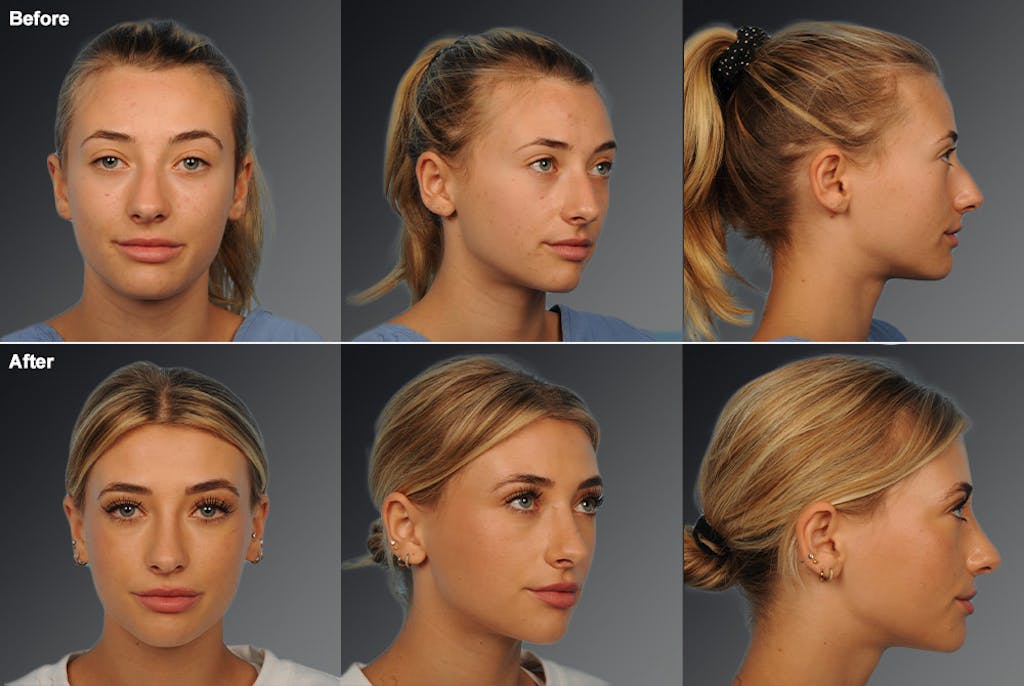
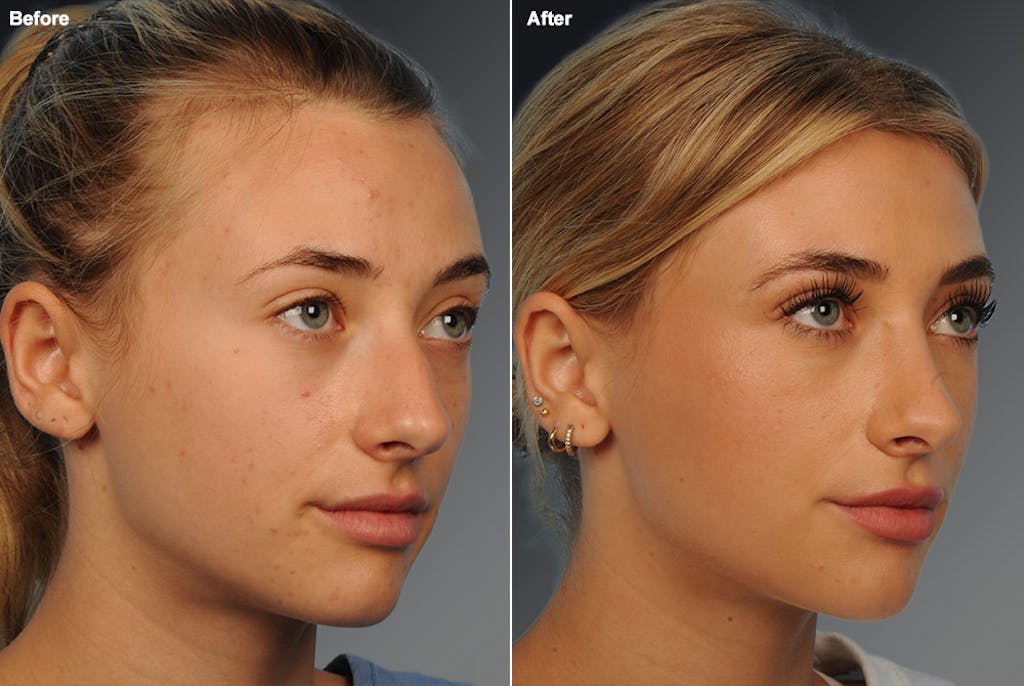
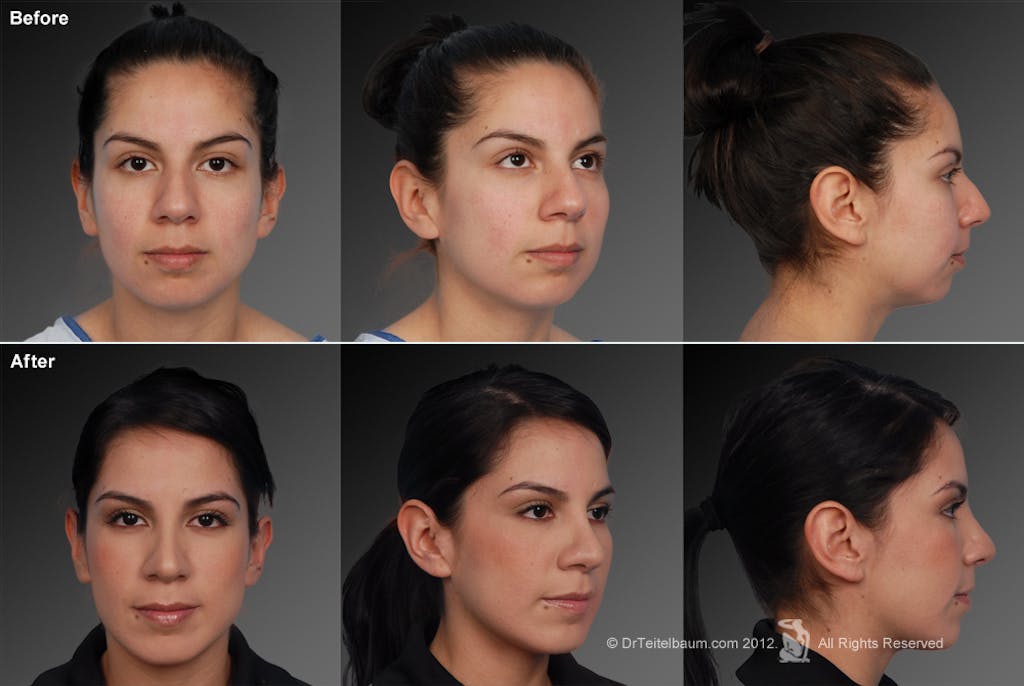
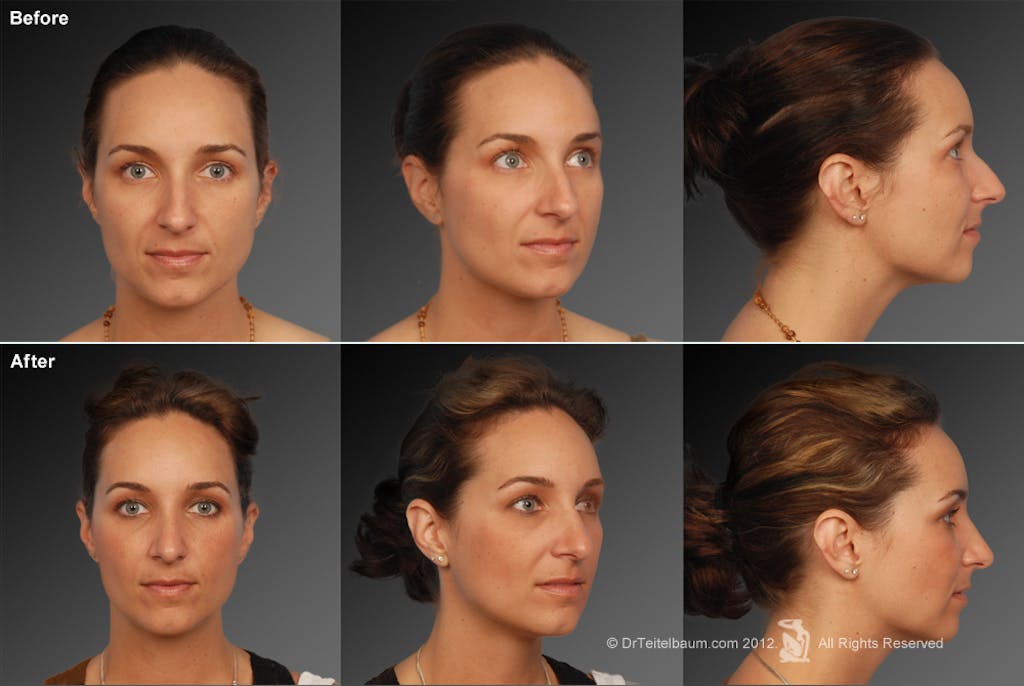
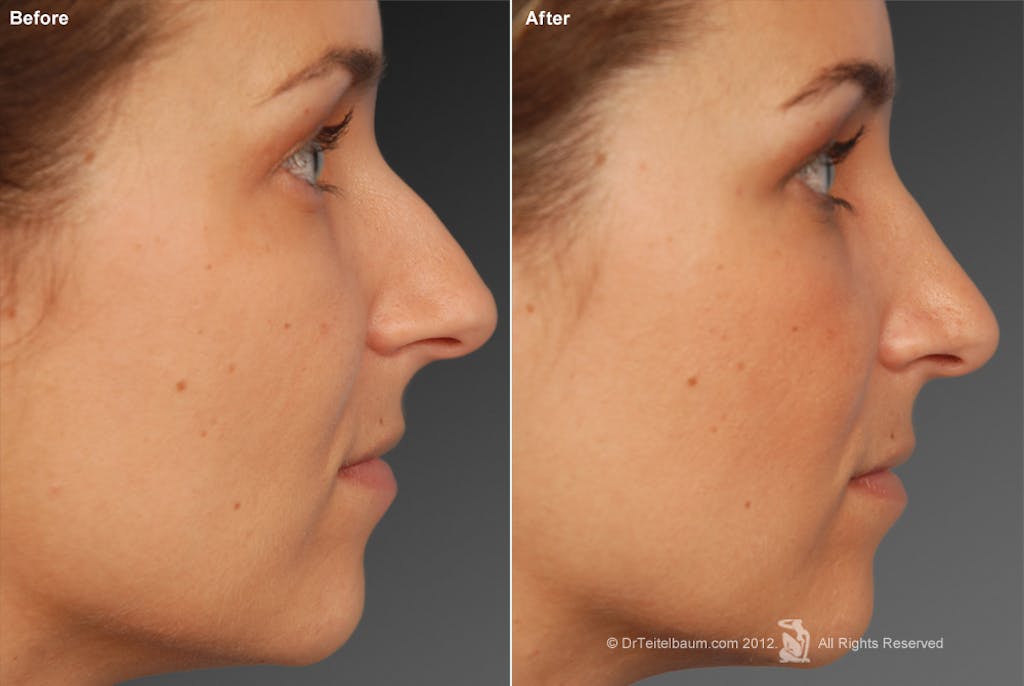
Dr. Teitelbaum’s approach to rhinoplasty is focused on enhancing the natural beauty of your face. He believes that a beautiful nose should blend seamlessly with your facial features, complementing your unique anatomy without drawing attention to itself. Dr. Teitelbaum’s goal is always to provide results that look natural, balanced, and in harmony with the rest of your face.

Rhinoplasty, often referred to as a nose job, is a surgical procedure designed to reshape and enhance the appearance of the nose. The goal of rhinoplasty is to create a nose that harmonizes with the rest of your facial features, improving proportions and balance. This procedure can address a variety of concerns, such as removing a bump, narrowing the nasal tip, or refining the overall shape for a more aesthetically pleasing result.
Unlike what many think of as the typical "nose job," rhinoplasty with Dr. Teitelbaum is performed with an emphasis on creating natural-looking results that are in harmony with your unique facial structure. The procedure can be customized to suit your specific desires, whether you're looking to enhance facial balance or simply refine a feature that has always bothered you.
Dr. Teitelbaum’s approach to rhinoplasty focuses on subtle, yet transformative changes, ensuring that your nose complements your face, rather than standing out as an obvious result of surgery.
Dr. Teitelbaum brings over 25 years of experience to every rhinoplasty. His approach is customized for each patient, ensuring that the result enhances natural beauty while preserving the unique character of your face.
Dr. Teitelbaum’s artistry and precision ensure that every rhinoplasty is tailored to the patient's desires while maintaining functional harmony and aesthetic balance.
Rhinoplasty is ideal for individuals who are dissatisfied with the appearance of their nose, whether it’s a bump, a wide bridge, or a tip that’s too large or asymmetric.
Key candidacy factors:
Dr. Teitelbaum helps you identify whether rhinoplasty will truly enhance your appearance or if other procedures may be more appropriate.

Undergoing a rhinoplasty can provide several key benefits beyond just aesthetic improvement.
Key benefits of rhinoplasty include:
Dr. Teitelbaum takes great care in delivering results that look and feel natural, ensuring that your nose enhances your beauty rather than becoming a focal point.
There are two main techniques used in rhinoplasty: open and closed. Each has its advantages depending on the complexity of the procedure.
This technique involves a small incision across the columella, the skin between the nostrils. It allows for more precise adjustments and is typically used for more complex procedures.
In this approach, all incisions are made inside the nostrils, meaning no external scarring. It’s ideal for less complex procedures and typically leads to a quicker recovery.
Dr. Teitelbaum will discuss the best approach based on your individual needs and goals.
Post-surgical care: After the procedure, you may have a splint on your nose for 5-7 days, with some swelling and bruising, especially around the eyes.
Pain management: Rhinoplasty typically has mild discomfort, but pain medications will be provided to help manage any pain.
Returning to work: Most patients can return to work after 5-7 days, though some may need more time if there is bruising.
Swelling: Swelling is common and may last several weeks. The majority of swelling will subside within the first month, but subtle changes will continue over the next 3-6 months.
Resuming exercise: Dr. Teitelbaum advises waiting 3 weeks before resuming strenuous activities or exercise to ensure proper healing.
Full results: You will see the final shape of your nose in about 6-12 months as the swelling fully resolves.
Incision care: If you’ve had an open rhinoplasty, Dr. Teitelbaum will guide you on cleaning and caring for the incision site to minimize scarring.
Follow-up appointments: Dr. Teitelbaum will see you regularly to monitor your healing process and ensure optimal results.
Rhinoplasty is a popular procedure for teenagers, especially those in 11th and 12th grade when nasal growth typically stabilizes. Dr. Teitelbaum ensures that surgery is considered only after growth is complete to avoid interfering with future development. Additionally, emotional maturity is essential, as teens must clearly express why they want the surgery and how it will benefit them.
Dr. Teitelbaum's goal is to enhance natural beauty, not to "de-ethnicize" the nose. He tailors each rhinoplasty to complement the patient's unique facial features, promoting self-confidence and balance.
Noses can look unnatural for two reasons
One is that the shape of the nose itself does not follow the graceful contours of the unoperated upon nose. Instead, there can be irregularities such as hard angles or depressions. Of more concern is that the nose can look out of balance with the rest of the face. While growing up in Los Angeles, Dr. Teitelbaum recalls an old time Beverly Hills plastic surgeon who "gave everyone the same nose." In fact, in some circles socialites would point out someone as having "A Dr. So and So nose." White or black, Middle Eastern or Northern European, everyone was given the same nose.
While at an academic level this approach has long been abandoned, we still see people who have noses that don't fit their face. While a soft profile and a smaller tip are typically the changes that most people need, these changes should only be done in an amount appropriate to make that person look better.
Dr. Teitelbaum is a big believer in the eyes as being the most important aspect of human beauty. Certainly there are individuals whose eyes are of unusual beauty. But often when we describe someone as having beautiful eyes we are referring to our ability to actually see their eyes. Dr. Teitelbaum is careful to make your nose look better, but not to allow it to divert attention from your eyes.
In some cases, rhinoplasty is done in conjunction with other procedures for optimal facial balance.
Common procedures combined with rhinoplasty include:
As you look at the photos of some of Dr. Teitelbaum's rhinoplasty patients, you will notice that their noses do not just look better; they look better. Handsomer, prettier, sexier, simply more attractive.
Yes. Dr. Teitelbaum ensures that your nose looks natural, enhancing your facial balance without making the nose a focal point. The goal is to create a nose that could have always been there.
Yes, rhinoplasty can be safely combined with chin implants, liposuction under the chin, facelifts, or other cosmetic procedures to achieve a more harmonious overall result.
Most patients can return to work after 5-7 days, although there may still be bruising. If the splint is still in place, you may return to work sooner if you don’t mind being seen with it.
Dr. Teitelbaum performs rhinoplasty under general anesthesia, ensuring that you remain comfortable and pain-free during the procedure while allowing him to focus on achieving the best results.
Swelling typically peaks within 5-6 days after surgery, gradually subsiding over the next few weeks. Final results may take up to 12 months to fully reveal as subtle swelling continues to diminish.
You can wear glasses after rhinoplasty, but it's advised to wait until the swelling has subsided to avoid putting pressure on the nose. Dr. Teitelbaum will guide you on when it’s safe to wear them again.
